What Is the 25% Rule for Roofing in NC?
In this article
The 25% rule says that if more than a quarter of a roof is repaired or replaced in any 12-month period, the whole roof has to be brought up to current code. That rule is written into Florida's building code. North Carolina's residential code has no 25% threshold, so a damaged roof in Charlotte does not have to come off just because the repair area passed a quarter of the roof.
North Carolina's residential code has no 25% threshold.
Where the 25% number comes from
The rule lives in the Florida Building Code, Existing Building, Section 706.1.1. It caps repairs, replacements and recovers at 25 percent of a roof area or roof section in any 12 months, and past that the entire roof section has to be replaced to meet the current Florida code.
Search for it and the version you find is usually Florida's, repeated on roofing sites a long way from Florida. Easy to assume it applies here too.
What North Carolina's code says about reroofing
North Carolina writes its own residential code, and the reroofing rules sit in Section R908 of the 2024 edition. Read it through, there is no percentage in it that turns a repair into a full replacement. The parts that matter for a homeowner:
- A roof replacement means taking the old roof coverings off down to the deck. Replacing up to 15 percent of the existing roof deck during that replacement is not treated as structural work, so a few soft sheets do not turn a reroof into a framing job.
- No new shingles over old ones when the existing roof is water soaked, too deteriorated to hold another layer, or already two or more layers deep.
- On a reroof, existing flashings, edgings, vents and similar parts get replaced if they are rusted, damaged or deteriorated.
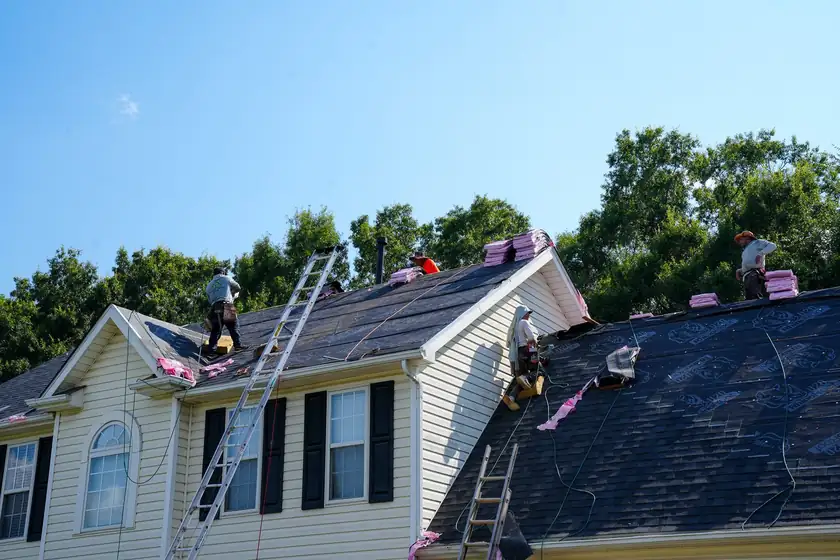
That lines up with how we already work, where every roof replacement starts with a tear-off to the decking and any soft sheets we find get replaced before new underlayment and ice-and-water go down.
What decides repair or replacement on an insurance claim
On a claim, people usually take the 25% idea to mean that enough damage forces the insurer to pay for a whole roof. The North Carolina Department of Insurance answers that in its homeowners FAQ. A homeowners policy covers direct physical damage, so the insurer only has to replace the damaged area, "even if the shingles will not match." The Department adds that the original shingles may be discontinued.
So on a North Carolina claim, your policy and what the adjuster sees on the roof set what gets paid. Our part is the photos. Our owner photographs every hit slope by slope, writes the photo report your insurer asks for, and is on the roof with the adjuster when they come out. If a storm just came through, our post on how long you have to file a storm roof claim in NC covers the dates that apply.
One Google reviewer wrote that after hail, our owner contacted their insurance company, coordinated the inspections and prepared a detailed photo report documenting the damage, and the insurer agreed to pay for the entire roof. That was their insurer's decision, and a different policy or different damage can come out the other way.
When a repair is the right call
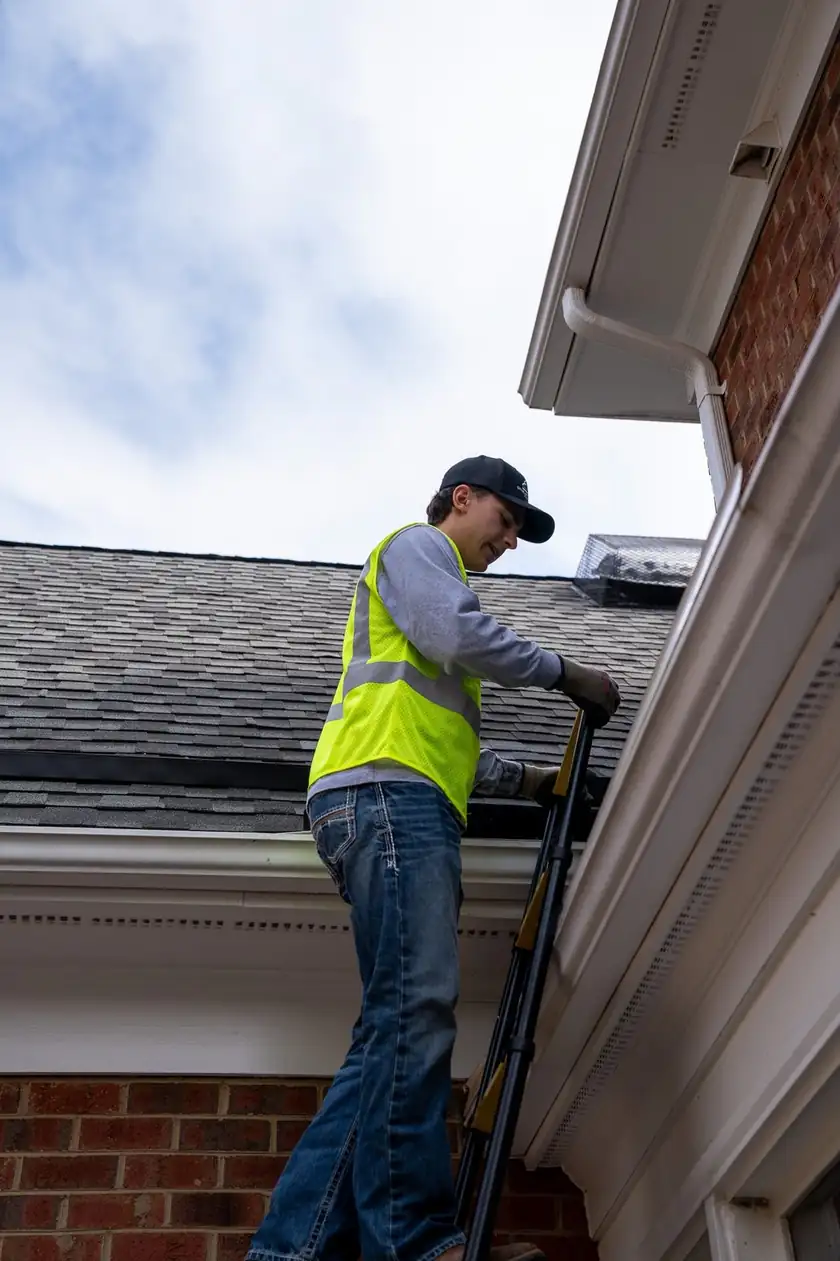
Not every roof we look at needs replacing. A leak where a lower roof meets a brick wall can come from step flashing that has pulled away, and fixing that is a repair job.
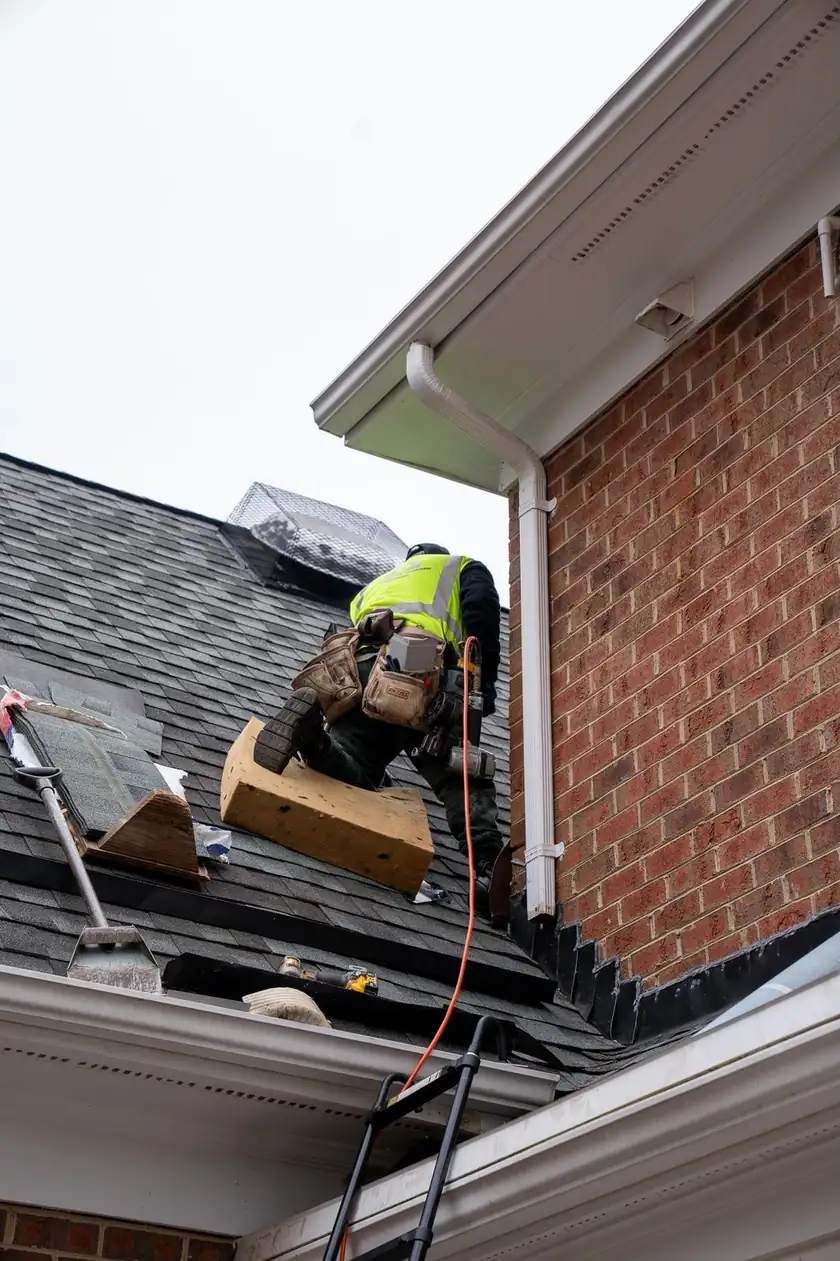
One reviewer asked for a general roof inspection after a year of bad weather and fully expected to hear about damage. The roof was in very good shape. Our owner did find some rusty nails and a few places that could leak eventually, replaced the nails and sealed those spots. The drainage problem another reviewer called about was most likely debris on the gutter guards, which our owner cleared, and nobody tried to sell them a repair or replacement job.
That is why the inspection comes first and costs nothing. You get the photos of what is worn and what is fine, the way one reviewer was shown good shingles next to worn ones before hearing the roof was in good shape, and any repair gets quoted to what is actually up there.
When replacement makes more sense
Some roofs do need to come off. The North Carolina code takes a few options off the table on its own: a roof that already carries two layers cannot take a third, and a water-soaked roof cannot be covered over. The other case is storm damage where the insurer has already agreed the roof needs replacing.
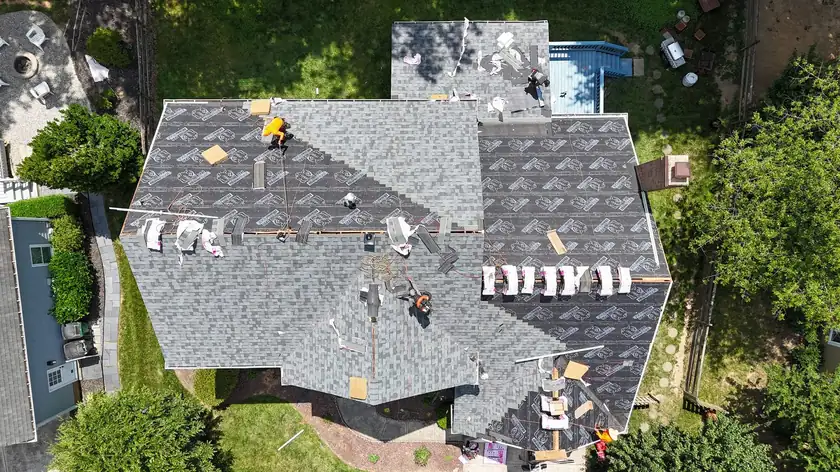
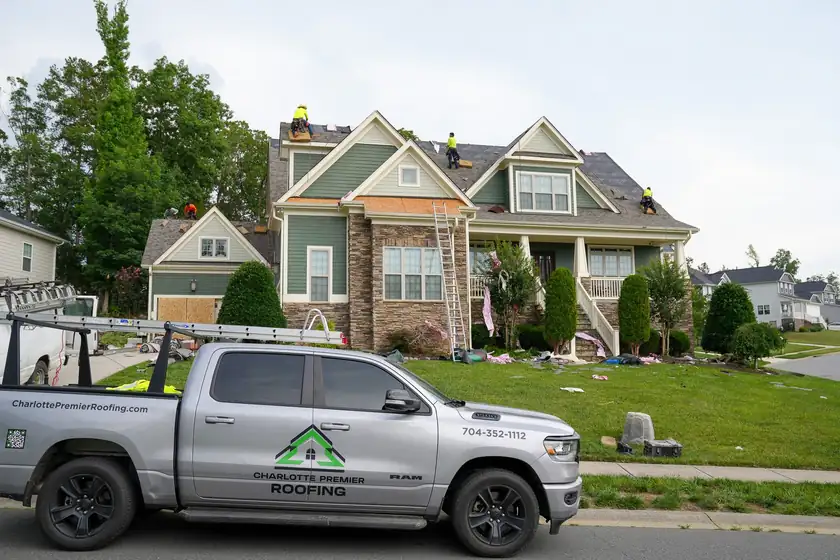
When we replace a roof, the work is the same whether a claim paid for it or you did. Tear-off to the decking, soft sheets swapped, new underlayment, drip edge, pipe boots and flashing, then Owens Corning Duration architectural shingles. The finished roof carries our 5-year workmanship warranty and a manufacturer material warranty on the shingles.
If you are trying to work out which side of that line your roof is on, book a free photo inspection through our roof repair page.