9 Questions to Ask a Roofing Contractor in Matthews, NC
A rating tells you how the last job went. These questions tell you what you are buying on yours.
The short answer
Before you hire a roofing contractor in Matthews, NC for a roof replacement, ask what comes off, what goes back on, who answers for it and what is in writing. Nine questions cover that, and any roofer worth hiring can answer them at the kitchen table without looking anything up.
Ask all of them of everyone you are considering. If you do not have names yet, start with our list of companies for roofing in Matthews, NC, sorted by Google rating and review count. We are on that list, so hold us to these too.
| Ask | A straight answer sounds like |
|---|---|
| Tear-off or layover? | Which one, and what happens to soft decking |
| New flashing and pipe boots? | Named on the estimate, detail by detail |
| How will the attic vent? | Intake and exhaust, checked in the attic |
| Who runs the job? | A name and a phone number |
| Insurance and state license? | Proof of insurance you can hold, and the $40,000 rule |
| Who handles a permit? | The contractor, if one is required |
| What is in the contract? | The FTC list below, with no blanks |
| What does the warranty cover? | Workmanship and material, separately, in writing |
| How did you find my house? | Anything except a storm and a knock |
1. Will you tear the old roof off, or lay over it?
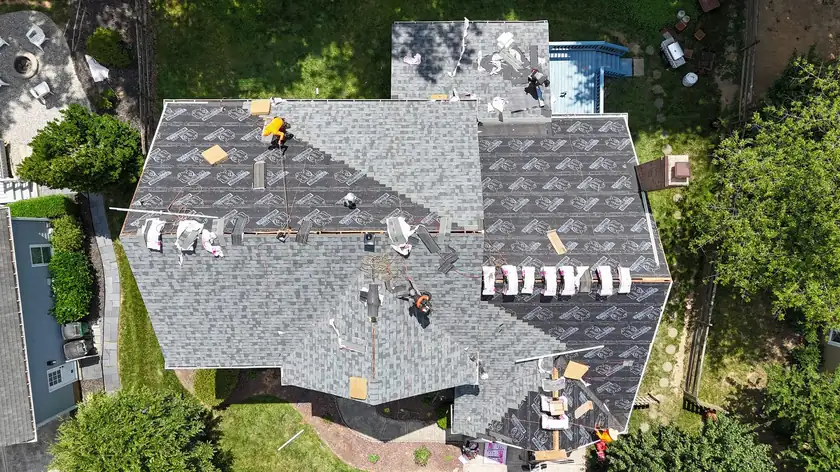
This matters more in Matthews than in the newer towns south of here. A lot of the roofs we see in Matthews are on their second shingle, and the subdivisions are older than the ones in Weddington and Waxhaw. A layover leaves the old shingles in place and the deck unseen. A tear-off exposes it.
The follow-up is decking. Ask what happens if soft sheets turn up, who tells you, and how that gets priced. If the estimate says nothing about decking, that conversation is only being put off until the roof is open. On our jobs the old roof comes off to the deck, the crew walks it, replaces any soft sheet and photographs the decking before underlayment goes on.
2. Is the flashing new, or are you reusing it?
Shingles are the part you see from the street. On our repair calls, the flashing and the pipe boots are usually where a roof goes first, and on older Matthews houses that can mean rusted flue flashing or a split boot under a roof that still has years left.
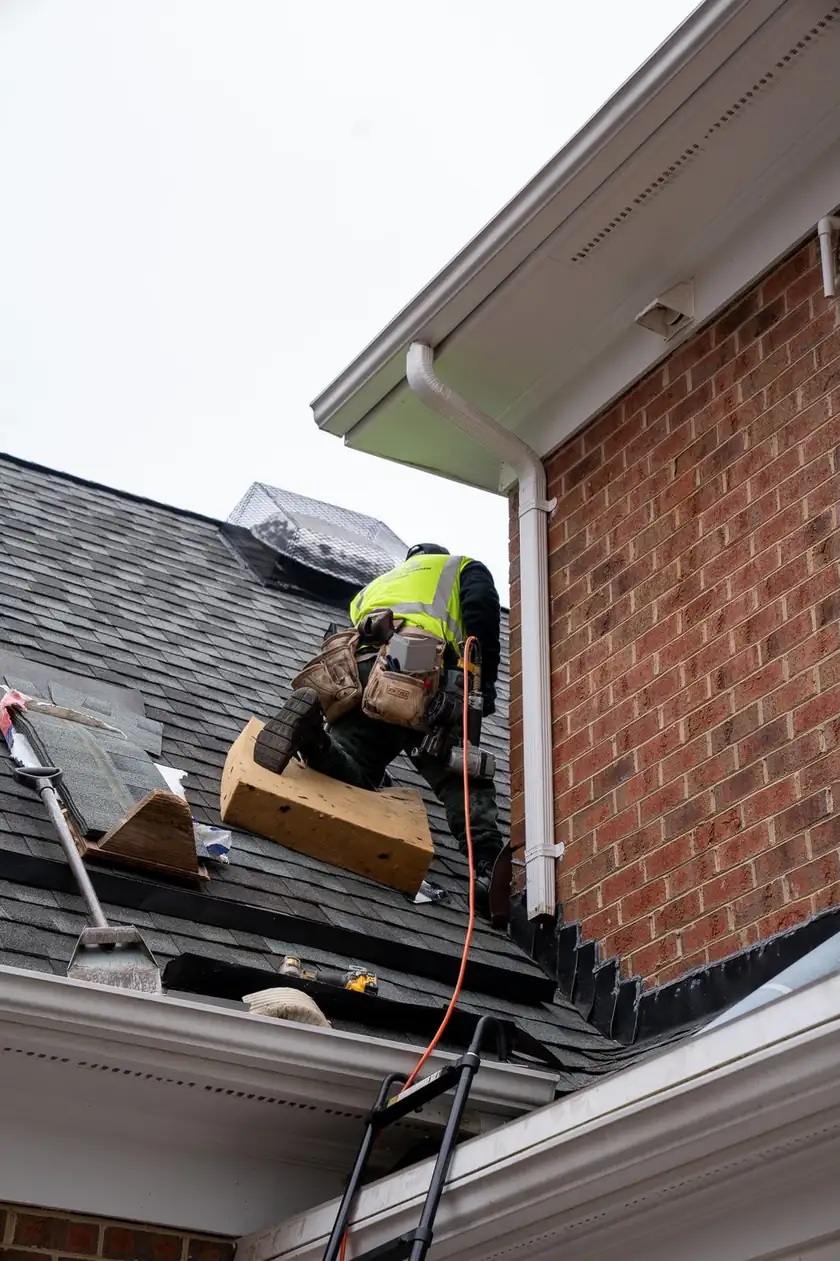
Ask the roofer to name each detail on the estimate: chimney, walls, valleys, every pipe boot. A sealant bead over the old metal can look fine on the day. We rebuild the flashing and replace every boot on a replacement, and you should expect a clear answer either way from whoever you hire.
3. How will the attic vent once the new shingles are on?
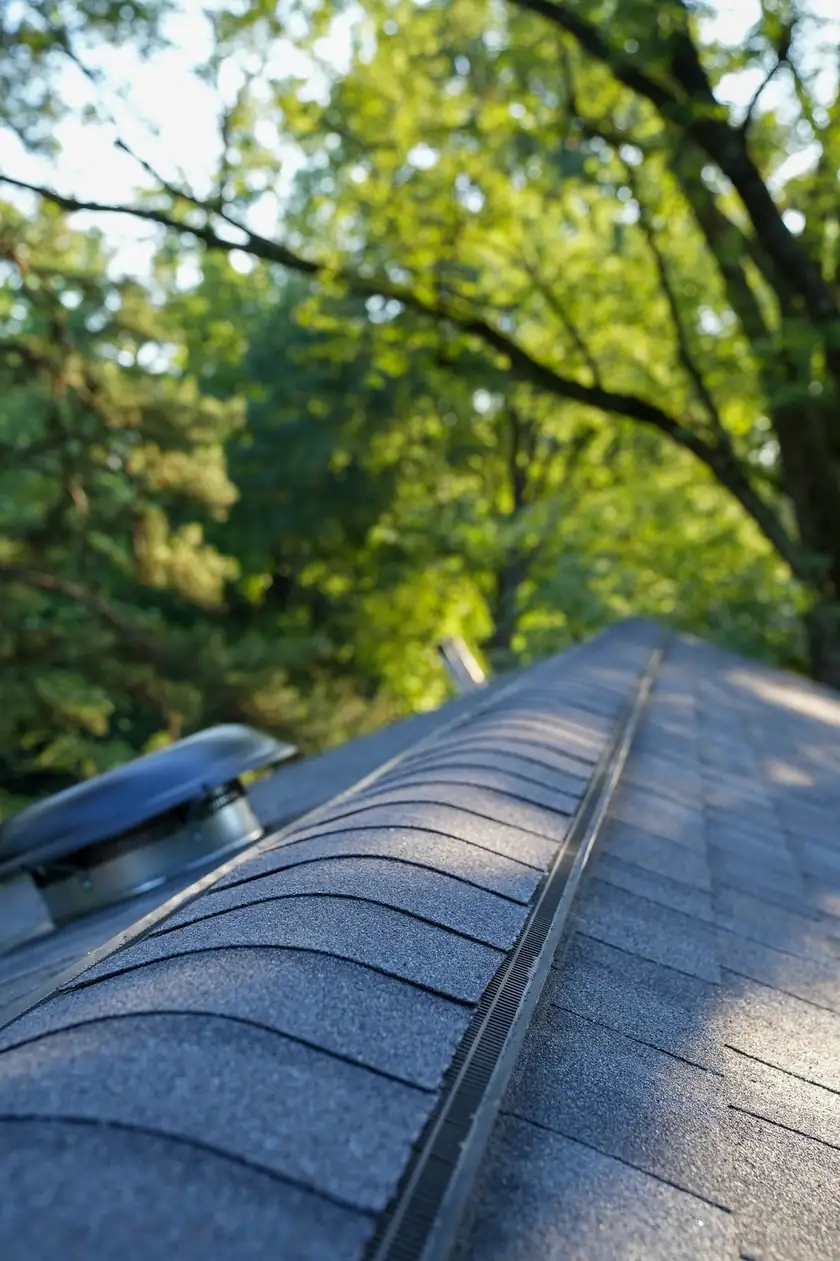
On Matthews roofs we look for venting that suited a three-tab roof and not an architectural one. A roofer who only looks at the shingles cannot answer this question, because the answer lives in the attic. Ask whether they will go up there, what they found at the intake and the ridge, and whether anything changes with the new roof.
4. Who runs the job, and who do I call if something is wrong?
Get a name and a number, and ask whether that person will be on site during the install. The person who sold the roof and the person on the roof can work for two different companies. Ask that plainly as well, and ask who employs the crew.
We are a small company, so our answer is short: the owner inspects the roof, writes the estimate and is on site for the install. Carolyn P. described the inspection in a Google review: “He inspected my roof and shared the pictures and what he had observed.”
5. Can I see proof of insurance, and does this job need a state license?
The FTC tells homeowners to ask a contractor for proof of insurance, so ask for the document itself. We carry general liability insurance and workers’ compensation coverage.
On licensing, go to the source. The NC Licensing Board for General Contractors says a general contractor must hold a state license when the total project cost is $40,000 or higher, and its site lets you search by license name and number. Ask each roofer where your project sits against that line, and check any license number you are given.
6. Is a permit needed, and who gets it?
Ask whether the work needs a permit and which office issues it. The answer you want is that the contractor checks and handles it. The FTC lists a contractor asking you to get the required building permits as a sign of a scam.
Rules change and we would rather not guess at them on a blog, so have the roofer name the office. If the answer is vague, call that office yourself. For one example of how this works across the county line, see roof replacement permits in Indian Trail.
7. What will the written estimate and contract say?
The FTC’s list is the one to use. A written estimate should describe the work, the materials, the completion date and the price. Before you sign a contract, it should carry:
- the contractor’s name, address, phone number and license number
- estimated start and completion dates
- any promises made in conversation, including scope and the cost of labor and materials
- a written statement of your right to cancel within three business days, if you signed at home or somewhere other than the seller’s permanent place of business
Fill every blank before you sign. The FTC also says not to pay the full amount up front and not to make the final payment until the work is done and you are satisfied. Jessica H. wrote in a Google review that our team “provided a detailed estimate, answered all my questions and completed the work quickly with no mess left behind.” Detail on paper is what lets you hold one quote beside another. If someone offers to arrange the loan as well, read our guide to roof replacement financing in Matthews first.
8. What does the warranty cover, and who stands behind it?
Two warranties usually sit on one roof. The manufacturer’s covers the material. The roofer’s covers the installation, and that one is only as good as the company still answering its phone. Ask how long each lasts, what voids it and when you get it in writing.
Ours is a 5-year workmanship warranty, handed over in writing at the final walkthrough, on Owens Corning Duration shingles with the manufacturer’s material warranty on the shingles.
9. How did you find my house?
The FTC’s first sign of a home improvement scam is a contractor at your door because they are “in the area.” That is worth remembering here. The NOAA Storm Events Database lists 52 severe weather reports within 10 miles of the center of Matthews from January 2019 through July 2026: 39 thunderstorm wind, 10 hail and 3 tornado reports, on 43 separate days. The list covers what someone reported, and none of those entries says a particular roof was damaged. It does mean a Matthews homeowner can expect a knock at some point.
A knock does not make someone dishonest, and it does not earn them a signature that day either. The same FTC list names pressure for an immediate decision and cash-only payment. Get the door-knocker’s answers to these nine questions, in writing, on your own schedule. If a storm did hit your roof, our storm damage roofing page explains what we photograph for a claim.
When you have the answers
Put the answers side by side with the estimates. When you have picked a crew, our guide on preparing your Matthews home for a new roof covers the yard, the attic and the day itself. Our page on roof replacement in Matthews, NC covers the order of work, and what we see most on local houses is on our page about the roofs we work on in Matthews.
To ask us the same nine, call (704) 352-1112 or request a free roof inspection. Our owner walks the roof and the attic, photographs everything, and you get a written estimate with no obligation on it.
Sources. FTC, How To Avoid a Home Improvement Scam (July 2022), read November 4, 2026; NC Licensing Board for General Contractors, consumer FAQs on its home page, read November 4, 2026; NOAA National Centers for Environmental Information, Storm Events Database bulk files for 2019 to July 2026, events within 10 miles of the center of Matthews (35.116 N, 80.722 W), downloaded November 4, 2026. Our process and materials are as described on our own service pages.