What to photograph before a roof repair inspection in Charlotte
A ceiling stain tells you where water became visible inside. It does not locate the opening in the roof. Before a roof repair inspection in Charlotte, record what you can see safely from the house and yard: the stain, the time it appeared, any shingles or metal you found on the ground, and the outside area above that room. Leave the roof itself to the roofer.
Charlotte Premier Roofing offers a free photo inspection of the roof and attic. The owner, Matthew Zhuk, reviews the pictures with homeowners during the visit and gives a written estimate if work is needed. One customer review on the company's site describes an inspection that led to a small patch and a meeting with the insurance adjuster. Another homeowner expected damage after a year of bad weather and was told the roof was in good shape. A photograph is evidence for the conversation, not a promise that either outcome fits your house.
Start indoors, where the problem showed up
Take one wide photo of the ceiling or wall so the roofer can see the stain's position in the room. Then take a closer photo of the edge of the mark. If the mark changes after a particular rain, take another photo with the date. Tell the inspector whether the stain appeared once or has been growing.
If you can enter the attic safely, point out the room below the stain and any visible dampness or staining from the walkway. Do not step away from supported framing or move insulation to chase the source. Charlotte Premier Roofing's inspection includes the attic; the owner can check the decking from below.
A short note is enough: “Guest bedroom ceiling, first noticed after Tuesday's rain.” That gives the inspector a useful starting place without guessing what failed on the roof.
Photograph the outside from the ground
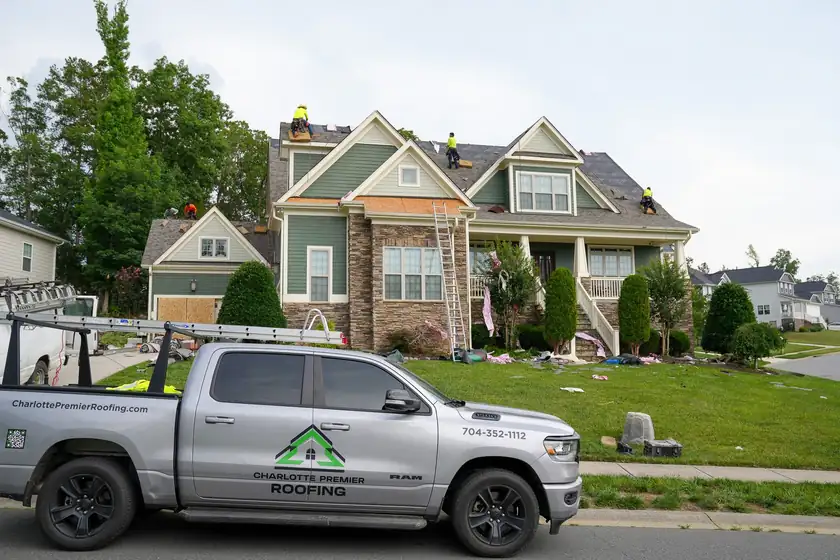
Stand back far enough to show the whole roof plane above the room. If you can see a missing shingle, lifted edge, debris or a damaged gutter, take a closer photo from a safe position. After a storm, photograph what fell into the yard before you clear it away.
You do not need to identify a pipe boot or flashing detail by name. The company's roof repair page lists leaks at flashing, pipe boots and wind-damaged shingles among the problems it inspects. Use a ground photo to show which part of the house concerns you; the owner can take the roof-level pictures.
Give the inspector a timeline
The timing can change the first questions. Did you find the stain after heavy rain, after wind moved through, or while there was no recent storm? Has anyone worked on the roof, chimney, siding or attic recently? Tell the inspector what you know and what you do not know.
If a storm affected other parts of the property, keep those photos together with the roof photos. Charlotte Premier Roofing says it documents hail and wind damage and can prepare a photo report for an adjuster. A homeowner's review on its site says Matthew coordinated inspections after hail damage. The contractor's findings and the insurer's decision are separate steps; do not assume an insurance outcome from a few pictures.
| What you can record safely | Why it helps at the visit |
|---|---|
| The stain in its room and a dated close-up | Shows where and when the symptom appeared |
| A wide view of the roof from the yard | Identifies the roof plane to inspect |
| Fallen shingles or damaged material on the ground | Preserves what changed after wind or rain |
| Any prior repair information you have | Gives the owner context for the area |
Let the roof inspection settle the repair
Do not climb onto a wet or damaged roof for a better angle. The useful result of your preparation is a clearer conversation when the owner arrives. Charlotte Premier Roofing inspects the roof and attic, takes its own photos, and explains what it finds. A repair quote should name the work proposed. If the roof is sound, you should hear that too.
For service details, see roof repair in Charlotte. Send the property address and your short photo set with a free inspection request.