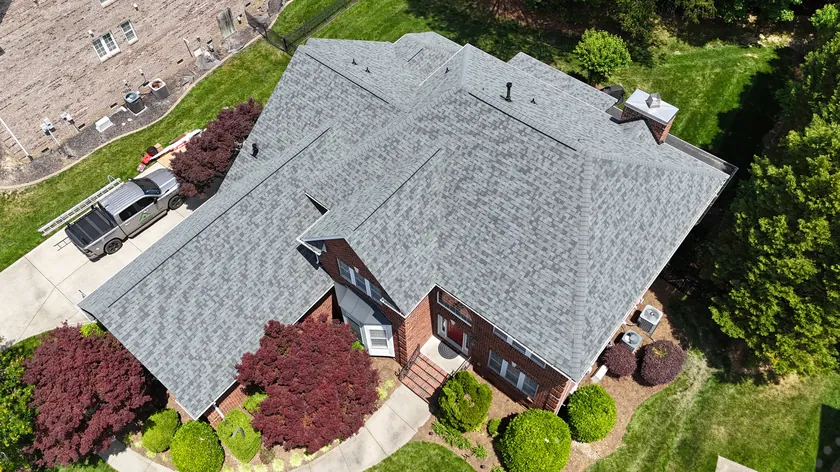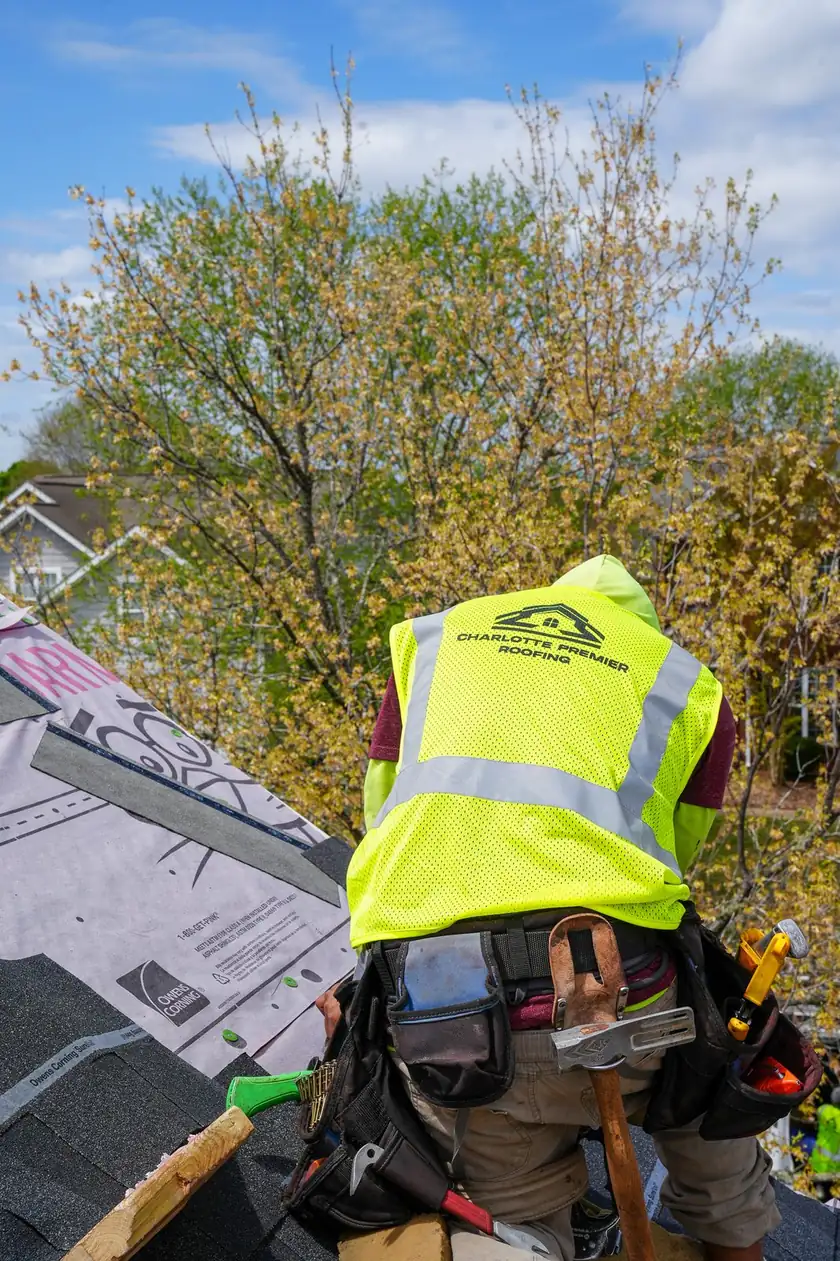
Do you need approval to replace a roof on a historic Waxhaw, NC home?
Only homes Waxhaw has designated as historic landmarks need the town's sign-off for a new roof, and a National Register listing on its own does not count. On a landmark, asphalt shingles going back on as asphalt shingles is minor work that staff approve. A change of material goes to the commission's monthly meeting.
The short answer
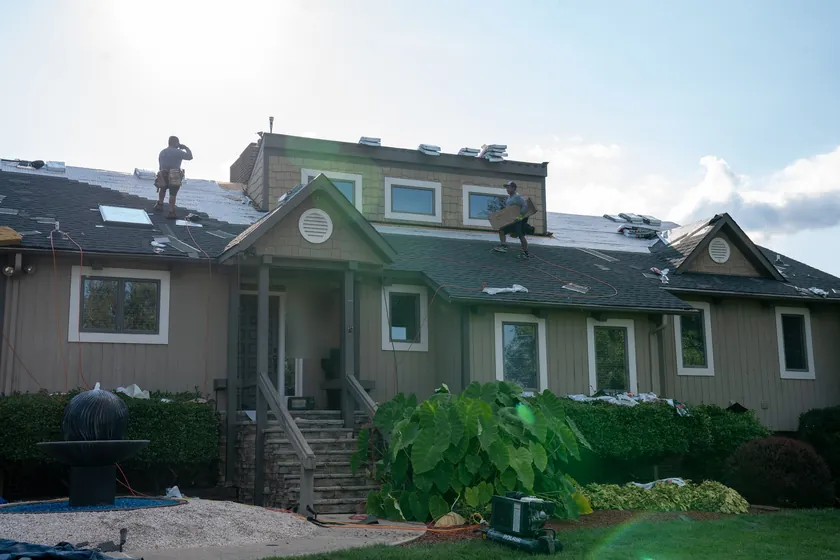
Most roof replacements in Waxhaw, NC need no historic approval at all. The town's preservation rules apply to properties Waxhaw has designated as historic landmarks, and being an older house near downtown does not make yours one. If your home is a landmark, the material decides the review. Replacing an asphalt or fiberglass shingle roof is "minor work" that town staff can approve, often in a few days. Replacing a roof with a different material is "major work" that goes to the Waxhaw Historic Preservation Commission at its monthly meeting.
Building permits are a separate question. Union County issues them almost everywhere in the county, but Monroe and Waxhaw are the two exceptions, so a Waxhaw roof goes through the town rather than the county office. This guide is from Charlotte Premier Roofing, for Waxhaw homeowners planning a roof replacement in the Charlotte area.
National Register district or local landmark: which one is your house?
This is where most of the confusion starts. Waxhaw has a historic district around Main Street listed on the National Register of Historic Places. Its nomination, filed through the State Historic Preservation Office, counts 93 contributing buildings. That listing is federal, and the NC Historic Preservation Office is plain about what it does for a homeowner: National Register listing "does not obligate or restrict a private owner in any way unless the owner seeks a federal benefit such as a grant or tax credit."
Local designation is the one with rules attached. The same HPO page says there is "no direct correlation between National Register listing and local designation." Waxhaw's standards are just as direct about landmarks: no exterior part of a designated landmark may be altered until a Certificate of Appropriateness "has been submitted and approved." In Waxhaw, Chapter 12 of the Land Development Code covers historic preservation, and the town's design standards describe its purpose as designating historic landmarks and issuing certificates "for the purpose of regulating the exterior alteration of historic landmarks."
To find out whether your house is a landmark, look at the landmark map in the town's design standards, linked in the sources below, or call the Town of Waxhaw at 704-843-2195 and ask for the Commission Liaison in Planning and Inspections. Do this before you sign for a roof.
The three levels of review on a Waxhaw landmark
Waxhaw's Historic Landmark Standards sort exterior work into three groups. Roofs show up in all three.
| Level | Roof examples from the standards | Who approves |
|---|---|---|
| Ordinary maintenance and repair | Replacing damaged shingles with the same design and material | No review |
| Minor work | Replacing asphalt or fiberglass shingle roofs, replacing or removing gutters and downspouts, repairing or repointing chimneys | The Commission Liaison on town staff, often within a few days |
| Major work | Replacing a roof with a different material, rebuilding a chimney | The Historic Preservation Commission at its monthly meeting |
Major work takes the longest. The application has to be in 30 days before the meeting so the town can notify the neighbors next door, and a filing fee may apply. The commission meets on the second Thursday of each month at 6:30 pm at Waxhaw Town Hall. If an owner disagrees with its decision, the standards allow an appeal to the Waxhaw Board of Adjustment within 15 days.
Every application, minor or major, starts with a required pre-application meeting with the liaison. The town's Certificate of Appropriateness application then asks for a description of the work, photos of the house and the work area, details of the replacement materials (design, dimensions, color and texture, with spec sheets or samples), and the names and addresses of the adjoining owners.
What the standards ask of a replacement roof
The "Roofs and Gutters" section reads like a roofer wrote half of it. The core rule is to replace a roof with like materials of the same design. For each material, it gets specific:
- Asphalt shingles go back as shingles with at least a 25-year warranty, in a color that suits the rest of the house. The standards note that architectural grade shingles have more dimension than lower grades, and they want one layer only: no shingles laid over old shingles, because the adhesive strips do not bond well and the extra layer adds weight.
- Slate goes back as slate or simulated slate.
- Metal goes back as metal, with ridges and standing seams that match the original. The ridge seam should overlap, not be a pre-engineered ridge cap.
- Low slopes get a note of their own. Asphalt shingles belong on a roof pitched at least 3:12, so a shallow porch roof often needs metal to shed water.
The rest is about what is underneath and around the shingles. Check the underlayment for punctures and rips and replace it if damaged. Replace damaged sheathing. Step the flashing along every place a sloped roof meets a chimney, dormer or wall. Keep the existing pitch and direction, keep the gutter layout, and repair hidden gutters rather than covering them, since covering them changes the pitch and the look of the roof.
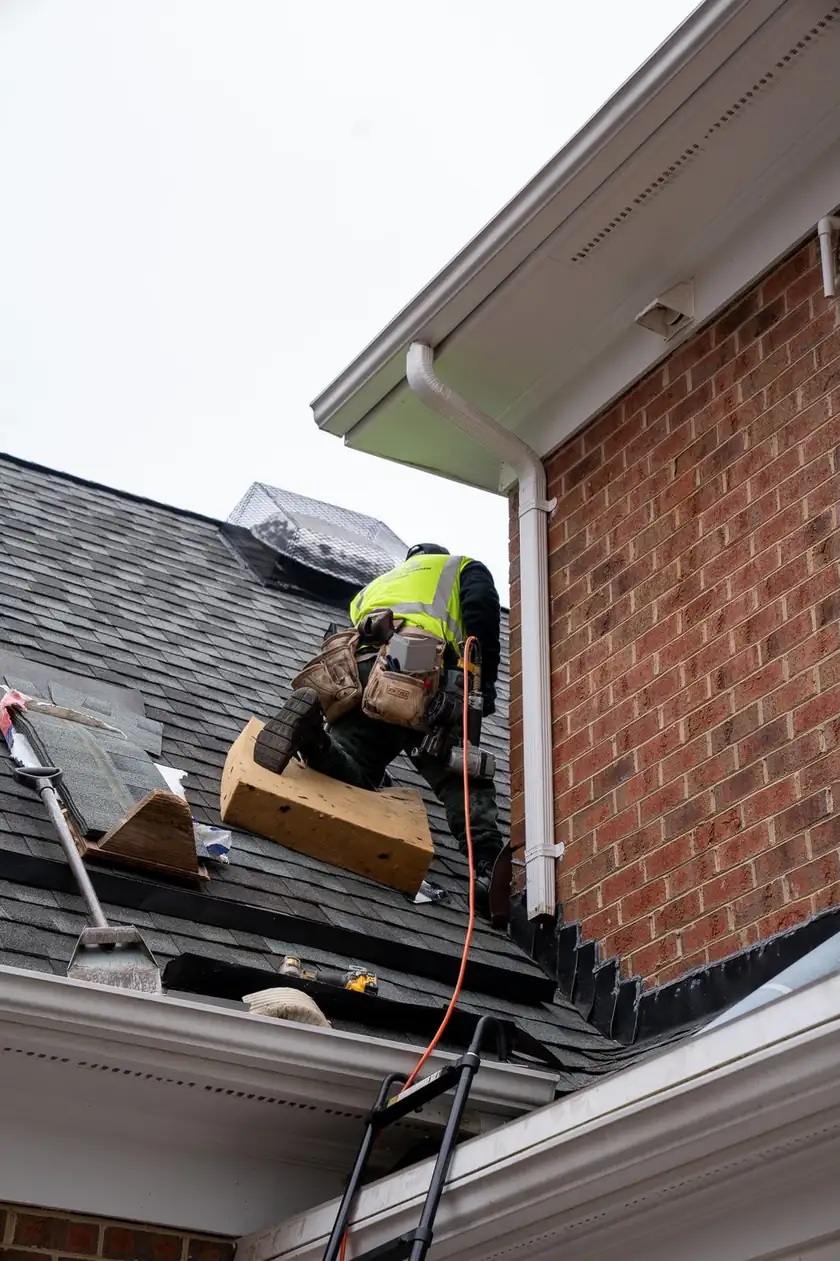
A few items catch people out. Chimneys and dormers stay, and dormer windows do not get swapped for vents. Anything new on the roof, a skylight, solar panels, a vent or a satellite dish, goes on the rear slope where it cannot be seen from the street. Ridge cresting and finials stay too.
How this changes a roof replacement estimate
On a non-landmark house in Waxhaw, none of this applies, and the estimate is the usual one: tear-off, decking, underlayment, flashing, shingles, cleanup. On a landmark, ask for three things in writing. First, the exact shingle line and color, since the liaison needs it and the standards ask for at least a 25-year warranty. Second, a flashing scope that names step flashing at every wall and chimney. Third, a note on any low-slope porch roof and what material goes back on it.
If you are weighing a change, like metal over an old shingle roof, build the commission's calendar into your timeline. That is a major work application, and the 30-day notice period comes before the meeting date. For how older downtown houses differ from newer builds once the shingles come off, our earlier post on roof replacement in Waxhaw on older and newer homes covers decking, layers and chimney flashing.
Start with the inspection
Whatever the house, the first step is someone on the roof and in the attic. Our free roof inspection comes with photos you can hand to the Commission Liaison if your home is a landmark. More on the work itself is on our roofing in Waxhaw page.
Sources: all read November 11, 2026. Town of Waxhaw, Waxhaw Historic Landmark Standards, Design and Resource Guide (amended September 9, 2021), Certificate of Appropriateness Application and Land Development Code (revised November 15, 2023). NC Historic Preservation Office, A Comparison to the National Register of Historic Places. NC State Historic Preservation Office, Waxhaw Historic District National Register nomination. Union County, Development Services.